
Assistant Professor of Zoology, V.V.Vanniaperumal College for
Women, Virudhunagar, Tamil Nadu India
Corresponding author email: muthusdream@gmail.com
Article Publishing History
Received: 27/09/2025
Accepted After Revision: 29/11/2025
Human CTLA-4 gene located on 2q33 encodes a molecule which plays an important role in the down regulation of CD28 interaction with the ligands on the surface of antigen-presenting cells (APCs). Many studies showed the association between the CTLA4 exon-1 49A/G polymorphism and the risk of developing Graves’ disease. In recent years many new studies were published which helped to shed light on the relationship of CTLA4 SNP49 with GD. So the present study performed the meta-analysis to explore the association between the SNP49 and GD susceptibility in human beings. At presently there are several SNP public databases and SNP is found to be widely used in the genetic association studies of various complex diseases such as obesity, diabetes, osteoporosis, asthma, hypertension, kidney failure and thyroidism etc.
The insilico study found that the CTLA4 49A/G SNP in exon-1 leads to the substitution of Ala with Thr in the signal peptide part. CTLA-4 is the one of widely studied non-HLA susceptibility gene of GD, is mainly expressed on the surface of Treg cells and conventional T cells and suppresses self-reactive T cell responses via down regulating ligand availability for the co-stimulatory receptor CD28 to elicit inhibitory signals. The current study concluded that the polymorphisms of CTLA-4 are to be the candidates of the risk of the common autoimmune diseases at the genetic level. As GD is a T cell mediated autoimmune disorder and CTLA-4 plays a vital role in regulating T cell function. The study suggested that CTLA-4 expression or function is most likely associated with the pathogenesis of GD. Single nucleotide polymorphisms in the CTLA-4 gene may contribute to abnormal levels of CTLA-4, and subsequently play a leading part in the susceptibility to GD and still more SNPs research could be implemented for the betterment of the human health in future.
Allele, Single Nucleotide Polymorphism, Autoimmune Disease, Thyroidism and Gene.
Veeramuthumari P. Meta-Analysis of the CTLA-4 A/G Genetic Polymorphism Association and Risk of Graves’ Disease. International Journal of Biomedical Research Science (IJBRS). 2025;1(3).
Veeramuthumari P. Meta-Analysis of the CTLA-4 A/G Genetic Polymorphism Association and Risk of Graves’ Disease. International Journal of Biomedical Research Science (IJBRS). 2025;1(3). Available from: <a href=”https://shorturl.at/5ThYX“>https://shorturl.at/5ThYX</a>
INTRODUCTION
Thyroid disorders are appearing to be the leading major endocrine disorders. Thyroid dysfunction affects a significant portion of the population and appears to be the leading endocrine disorderIn India, thyroid diseases are common in worldwide. [5, 7]. According to a projection from various studies on thyroid disease, it has been estimated that about 42 million people in India suffer from thyroid diseases. The literature data reported that on the epidemiology of five common thyroid diseases in India: hypothyroidism, hyperthyroidism, goiter and iodine deficiency disorders, hashimoto’s thyroiditis, and thyroid cancer. Thyroid disorders are affecting around 42 million people in India [6, 13].
The thyroid is composed of closed sacs (follicles) lined with specialized thyroid cells. These cells secrete thyroglobulin, a large protein that acts as a storage molecule from which thyroid hormones are made and released into the blood. The rate at which this occurs is regulated by thyroid-stimulating hormone (TSH), which activates the thyroid cells by combining with TSH receptors found on the thyroid cell membrane. Hashimoto disease involves swelling of the gland (a condition called goiter) and a loss of thyroid hormone production (hypothyroidism). The autoimmune process underlying this disorder is thought to be instigated by helper T cells that react with thyroid antigens, although the mechanism is not completely understood. Once activated, the self-reactive T cells stimulate B cells to secrete antibodies against several target antigens, including thyroglobulin [9].
Autoimmune thyroid diseases (AITD) are the most prevalent organ-specific autoimmune diseases (ADs) and affect 2 – 5% of the population with great variability between genders (i.e., women 5–15% and men 1–5%) (4). AITD include Graves’ disease (GD) and Hashimoto Thyroiditis (HT), among others. HT and GD are the major causes of hypothyroidism and hyperthyroidism, respectively (12). Graves’ disease (GD) is an autoimmune thyroid disease. Multiple genetic factors are believed to be involved in its pathogenesis, but the factors are largely unknown, except for sex (female disease preponderance) and the role of human leukocyte antigen (HLA) genes on chromosome 6.
To understand the mechanisms underlying the development of GD, a search for non-HLA-linked genes is crucial, and we tested several candidate genes, including the CTLA-4 gene on chromosome 2q33. CTLA-4 molecules may either facilitate or down-regulate the second signal to T-cells, which is provided by the interaction between the two accessory molecules CD28 and B7 (14). So, the CTLA-4 is one of the candidates as genetic markers for autoimmune diseases and it has been reported that if it is any type of single nucleotide (SNPs) polymorphisms occurred in CTLA4 molecule found to be block the B7-CD28 interaction by acting as functional receptor for B7 antigens and thus can interfere with the co-stimulation signal and inhibit T-cell proliferation.
The most frequent type of human genome variation are single nucleotide polymorphisms (SNPs) providing powerful tools for a variety of medical genetic studies CTLA-4 acts by delivering an inhibitory signal decreasing cytokine production, activation and proliferation of T lymphocytes. Single nucleotide polymorphisms, frequently called SNPs are the most common type of genetic variation among people. Each SNP represents a difference in a single DNA building block, called a nucleotide. For example, a SNP may replace the nucleotide cytosine (C) with the nucleotide thymine (T) in a certain stretch of DNA. SNPs occur normally throughout a person’s DNA. They occur almost once in every 1,000 nucleotides on average, which means there are roughly 4 to 5 million SNPs in a person’s genome. The Scientists have found more than 600 million SNPs in populations around the world. SNPs are found in the DNA between genes and it could be act as biological markers, helping scientists locate genes that are associated with disease. When SNPs occur within a gene or in a regulatory region near a gene, they may play a more direct role in disease by affecting the gene’s function (https://medlineplus.goSv/genetics/understanding/genomicresearch/snp/).
SNPs are helped to predict an individual’s response to certain drugs, susceptibility to environmental factors such as toxins, and risk of developing diseases. It also used to track the inheritance of disease-associated genetic variants within families. Research is ongoing to identify SNPs associated with complex diseases such as heart disease, diabetes, and cancer. Single nucleotide polymorphisms (SNPs) are the most common source of genetic variation in eukaryotic species and have become an important marker for genetic studies.
Still now there is a need more research on SNPs analysis (Insilico) in human genes in India. Hence the study focused on the Single nucleotide gene polymorphism in CTLA-4 gene and A/G polymorphism at position 49. Hence the study aimed to identify the Single nucleotide polymorphisms and analyze the effect of SNPs in CTLA-4 gene function of Graves’ disease condition in human.
MATERIAL AND METHOD
The human CTLA-4 gene A/G polymorphism at position 49 in exon 1 and wild sequences were analyzed and confirmed with SNP data base, Online Mendelian Inheritance in Man (OMIM) available at National Centre for Biological Information (NCBI) website. The sequences used in this study were retrieved from the databases at the NCBI, EBI and SNP.
Entrez and gene Ensembl: These two are comprehensive sites, which organized, collective resource linking out to various tools providing general information of gene structure, expression, splice variants encoded proteins, regulatory elements and single nucleotide polymorphisms (SNPs). OMIM: Online Mendelian Inheritance in Man database useful to establish or investigate disease association of gene of interest (1).
Phylogenetic Tree: https://www.ebi.ac.uk/Tools/services/rest/clustalo/result/clustalo-E20230416-072829-0392-86801791-p1m/phylotree.
Percent Identity Matrix: https://www.ebi.ac.uk/Tools/services/rest/clustalo/result/clustalo-E20230416-072829-0392-86801791-p1m/pim.
Mview Visualization file: https://www.ebi.ac.uk/Tools/services/rest/mview/result/mview-E20230416-073924-0633-13120070-p1m/aln-html. CTLA-4 (Benchling Result): https://benchling.com/s/seq-cxPStTOIgFuuygiUIs7c?m=slm-PMINsZn26fj4YXDtbBZd. CTLA-4 Manipulated – Single nucleotide change in 49 th position of Exon 1 (Benchling Result): https://benchling.com/s/seq-zoGIrFuooVtuQVh9OJ3Q?m=slm-zgs96S08DtElSKZry1Ug.
Table 1. List of databases and Internet links
| Databases | Link | Comments |
| GenBank | http://www.ncbi.nlm.nih.gov/GenBank/index.html | Genetic sequence database, a collection of all publicly available DNA sequences |
| BLAST | http://ww.ncbi.nlm.nih.gov/BLAST/ (updated2014) | Finds regions of local similarity between sequences. |
| CLUSTALW | http://www.ebi..ac.uk/clustalw/ (updated 2014) | Multiple sequence alignment |
| Domain search | https://www.ncbi.nlm.nih.gov/Structure/cdd/wrpsb.cgi | Protein family and domains |
| SABLE | http://sable.cchmc.org/. | Solvent accessibility |
| SNP database | http://www.ncbi.nlm.nih.gov/snp | Identify the SNPs in various regions of the genes. |
| Uniprot | http://www.uniprot.org | provides a database for protein information |
RESULTS AND DISCUSSION
Graves’ disease (GD) is also known as toxic diffuse goiter which increases the level of thyroid hormone. It is one of the organ-specific autoimmune diseases and it accounts for 85% of all clinical hyperthyroidism. The study found that the disease often presents in patients aged from 20–40 years old and with a male to female ratio of approximately 1:8 and a significant familial tendency. The clinical performance of GD is not limited to the thyroid but is a multi-system syndrome, including the high metabolic syndrome group, diffuses goiter, eye symptoms, lesions and thyroid extremity diseases. The study also demonstrated that the immunological concepts, GD are characterized by increased circulating antibodies against thyroid-stimulating hormone receptor (TSHR), thyroglobulin (TG) and thyroid peroxidase (TPO).
Although the precise pathogenesis involved in the process of GD is not completely understood, certain findings indicate that complex interactions between environmental, genetic, endogenous and local factors are involved in its pathogenesis. Hence both immune-modulating genes and thyroid-specific genes are involved in its genetic pathogenesis. It also remains unclear, however, how the interactions of various susceptibility genes contribute to the pathogenesis and clinical severity of the disease. So, the purpose of this study was to investigate the relationships between GD and A/G single nucleotide polymorphisms (SNPs) from CTLA-4.
Single Nucleotide Polymorphism (SNP) number search: CTLA-4 gene, function, accession number, name, protein name, number, taxonomic identifier number, taxonomic lineage, the total number amino acid, sequence status, disease, binary interaction, variant number, domain were found in Uniprot and SNP web database and it is shown in the table (Table: 2). The single nucleotide polymorphisms in CTLA-4 gene are important role in cause of the Graves’ disease. The present study demonstrated a single nucleotide polymorphism (SNP) in CTLA 4 gene at position (amino acid) 49, the amino acid change is alanine (A) to threonine (G) nucleotide change. Both these (SNPs) are the missense mutation noted (Table:2 & 3). The study found that the occurrence of A/G polymorphism is high (57%) when compared to the C/T (43%) polymorphism in CTLA- 4 gene (Figure 1).
Table 2. A/G SNPs in CTLA-4 gene
| Gene | Domain | Mutation | Amino acid position | Wild type | Mutant | Allelic frequency |
| CTLA-4 | Ig super family | Missense | 49 | A | G | 0.23 |
Figure 1: Domain search
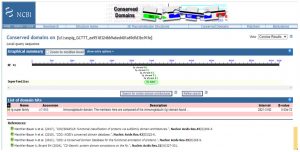
Table 3. Uniprot and SNP web database of CTLA-4 gene
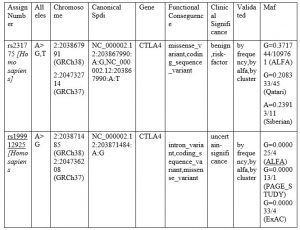
Figure 2: Multiple Sequence Alignment
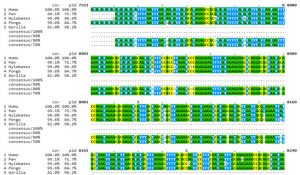
Note: Highlighted with yellow colour is found to be conserved across the species
The multiple sequence alignment of CTLA-4 gene was carried out by CLASTALW. The evolutionary conservation at the position 49 (A/G) in which the missense mutation was observed revealed that this particular polymorphism is conserved across the species (Homo sapiens, Pongo abelii, Pan troglodytes, Gorilla gorilla gorilla, Hylobates moloch) (Figure:2).
Table 4. CTLA-4 gene sequence based prediction tools:
| Web Server | Effect |
| SNP database | Missense |
| Variant effect predictor | CTLA-4 gne |
| Uniprot/Swiss-prot | Single nucleotide polymorphism |
| (DM)2 – Domain Mapping & Disease mutation | Polymorphism |
| SIFT | Tolerated (Score: 0.08) |
| PolyPhen | Benign (Score:0.006) |
| PolyDoms | Nonsynonymous & Synonymous |
| MuSTAB | Disease |
Benching Webserver (For primary analysis) showed that Benchling digitizes data capture, workflows, and handoffs so scientists can simplify, standardize, and seamlessly share data easily across an organization. Bioedit (Sequence Manipulation) is a software program that embeds the tools that scientists and technicians need so they perform specific tasks, such as manipulation of sequence alignment, ABI tracing or RNA analysis. UCSC Genome Browser UCSC Genome Browser Interactively visualizes genomic data. Ensembl is a genome browser for vertebrate genomes that supports research in comparative genomics, evolution, sequence variation and transcriptional regulation. Ensembl annotate genes, computes multiple alignments, predicts regulatory function and collects disease data. Ensembl tools include BLAST, BLAT, BioMart and the Variant Effect Predictor (VEP) for all supported species (Table:4; Figure 3,4,5 & 6) .
Figure 3: Visualization of Normal CTLA-4 (Benchling Result)
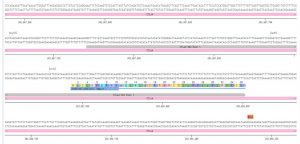
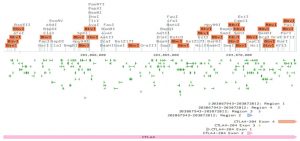
Figure 4: Visualization of Manipulated CTLA-4 Gene (Benchling Result)
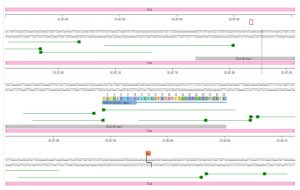
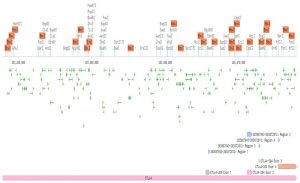
Figure 5: Visualization of Normal CTLA-4 (UCSC Result)
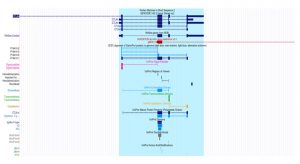
Figure 6: Visualization of Manipulated (UCSC Result)
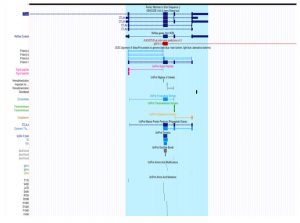
While visualizing, select the region of interest and use zoom into option for better understanding of the structure, restriction sites, ORF, Cut sites and Inline labels. For the confirmation the normal and changed ctla-4 sequence structiure was visualized in NCBI Genome Browser, enesembl and the resulting structure was as same as the Benchlng result. Eventhough single nucleotide mutation in the ctla-4 gene (Especialy in 49 th position in Exon 1) showed that positive affection to Grave’s disease, there is now considerable structural difference other than the changes in Aminoacid. One of the reasons for thismay be the presence of CDS region in the terminal part of Exon 1, other than being in the 49 th position or nearby position. The meta analysis of CTLA-4 gene sequence compared with the manipulated (Single nucleotide A/G polymorphic sequence showed that the changes in the sequence may alter the structure of the gene. It will lead to malfunctioning of the CTLA-4 gene during the immunological process.
Apart from GD, the polymorphism of CTLA-4 has been found in many diseases which included Addison’s disease, autoimmune hypothyroidism, and rheumatoid arthritis. The CTLA4 49A/G SNP in exon-1 leads to the substitution of Ala with Thr in the signal peptide part which was reported to cause misprocessing of CTLA-4 in the ER resulting in less efficient glycosylation and diminished surface expression of CTLA-4 protein. According to Anjos et al., (2002) (2) (10) findings, the current study also demonstrated that the longer repeats of the UTR microsatellite are associated with reduced CTLA-4 inhibitory function.[15] reported that a number of studies have revealed that an autoimmune response, in particular cellular immunity against T lymphocytes and tyrosinase family proteins, acts a pivotal part in the initiation and maintenance of uveitis [11].
Lymphoid tyrosine phosphatase (LYP) is a member of the protein tyrosine kinases family and expressed in T cells The LYP protein is encoded by the human protein tyrosine phosphatase nonreceptor 22 (PTPN22) gene on chromosome 1p13, which plays a negative regulatory role in the T-cell signaling pathway. Dysfunction of PTPN22 (i.e., increased activity) suppressed the T-cell receptor (TCR) signal transduction of regulatory T cells, thus weakening the regulation function of T cells and leading to autoimmune diseases. Many functional mutations have been described and conferred either altered susceptibility to autoimmune diseases or appeared to influence the severity and clinical outcomes Rawlings et al., 2015). Based on the literatures there is need of more research on association of SNPs and CTLA-4 molecule and related proteins. So, the study will concentrate on the proteins involved signal transduction of regulatory T cells in future.
CONCLUSION
Human CTLA-4 gene, located on 2q33, encodes a molecule which plays an important role in the down regulation of CD28 interaction with the ligands on the surface of antigen-presenting cells (APCs) (8). The important inhibitory role of CTLA-4 in T-cell function has made it be one candidate gene when exploring autoimmune diseases. Many studies have established that T-lymphocyte antigen-4 (CTLA4) is a susceptible gene for Graves’ disease (GD). Also many studies showed the association between the CTLA4 exon-1 49A/G polymorphism and the risk of developing Graves’ disease. But those results were inconsistent. In recent years many new studies were published which helped to shed light on the relationship of CTLA4 SNP49 with GD. So the present study performed the meta-analysis to explore the association between the SNP49 and GD susceptibility in human beings.
At presently there are several SNP public databases and SNP is found to be widely used in the genetic association studies of various complex diseases such as obesity, diabetes, osteoporosis, asthma, hypertension, kidney failure and thyroidism etc. The allele frequencies are important in selection of SNPs for studying complex diseases (3). The insilico study found that the CTLA4 49A/G SNP in exon-1 leads to the substitution of Ala with Thr in the signal peptide part. Cytotoxic T lymphocyte-associated protein 4 (CTLA-4), one of widely studied non-HLA susceptibility gene of GD, is mainly expressed on the surface of Treg cells and conventional T cells and suppresses self-reactive T cell responses via down regulating ligand availability for the co-stimulatory receptor CD28 to elicit inhibitory signals.
The current study concluded that the polymorphisms of CTLA-4 are to be the candidates of the risk of the common autoimmune diseases at the genetic level. As GD is a T cell mediated autoimmune disorder and CTLA-4 plays a vital role in regulating T cell function. The study suggested that CTLA-4 expression or function is most likely associated with the pathogenesis of GD. Single nucleotide polymorphisms in the CTLA-4 gene may contribute to abnormal levels of CTLA-4, and subsequently play a leading part in the susceptibility to GD and still more SNPs research could be implemented for the betterment of the human health in future.
ACKNOWLEDGEMENT
The author grateful to thank the Dr. J. Rajendhran, Assistant Professor, Department of Genetics, School of Biological Science, Madurai Kamaraj University, Madurai, Tamil Nadu, India for guidance and provided the bioinformatics laboratory in the Meta-Analysis of the Ctla-4 A/G Gene Polymorphism.
Conflict of Interest: Identification of genetic markers for the human diseases helped for the better diagnosis and treatment of the diseases.
REFERENCES
- Amberger JS, Carol A Bocchini CA, François Schiettecatte F,, Scott AF and Hamosh A. (2015) OMIM.org: Online Mendelian Inheritance in Man (OMIM®), an online catalog of human genes and genetic disorders. Nucleic Acids Res. 43(Database issue):D789-98.
- Anjos S, A. Nguyen, H. Ounissi-Benkalha, M. C. Tessier, and C. Polychronakos, “A common autoimmunity predisposing signal peptide variant of the cytotoxic T-lymphocyte antigen 4 results in inefficient glycosylation of the susceptibility allele,” The Journal of Biological Chemistry, vol. 277, no. 48, pp. 46478– 46486, 2002.
- Goddard KA, Hopkins PJ, Hall JM, Witte JS: 2000, Linkage disequilibrium and allele –frequency distribution for 114 single nucleotide polymorphism in five populations. Am J Genet, 66:216-234.
- Hammink K, Li X, Sundqvist J, Sundqvist K, 2010. The epidemiology of Graves’ disease: evidence of a genetic and an environmental contribution. J Autoimmune 34: J307-13.
- Hula IS, Plies N, Elko MB, Gun jaca I, Toorak V, Brad D, Panda A, Pollack O, Hayward C and Zamani T, 2022. Epidemiology of Hypothyroidism, Hyperthyroidism and Positive Thyroid Antibodies in the Croatian Population. Biology 11(3)394.
- Koarada S, Haruta Y, Tada Y, Ushiyama O, Morito F, Ohta A, et al. Increased entry of CD4+ T cells into the Th1 cytokine effector pathway during T-cell division following stimulation in Behcet’s disease. Rheumatology. 2004;43(7):843–51.
- Mohammad H. Al-Qahtani, Sufyan A. El Yahia, Abdulaziz S. AL Qahtani, Abdulrahman J. AL Qahtani, Abdulaziz A. Alameri, Sultan M. AL Qahtani, Abdullah A. Yousef, Waleed H. Albula, Bassam H. Away, Alaia A. Adajania, and Mohammed A. Al Hamdi. 2023. Thyroid Disorders Spectrum in Pediatric Endocrine Clinic; Seven-Year Experience of a Teaching Hospital in Saudi Arabia. Children (Basel).10(2): 390.
- Pengfei Du, Xiaojie Ma and Wang C. (2014) Association of CTLA4 gene polymorphism with Graves’ Opthalmopathy-A Meta Analysis. Internat of Genomics.1-17.
- Perdue SS and Humphrey JH. https://www.britannica.com/science/prevalence(2023).
- Takara M, T. Kouki, and L. J. DeGroot, “CTLA-4 AT-repeat polymorphism reduces the inhibitory function of CTLA-4 in Graves’ disease,” Thyroid, vol. 13, no. 12, pp. 1083–1089, 2003.
- Tarner IH, Fathman CG. Does our current understanding of the molecular basis of immune tolerance predict new therapies for autoimmune disease? Nat Clin Pract Rheumatol. 2006 Sep;2(9):491–9.
- Tomer Y, 2010. Genetic susceptibility to autoimmune thyroid disease: past, present, and future. Thyroid 20: 715-25.
- Unnikrishnan AG and Menon UV. 2011. Thyroid disorders in India: An epidemiological perspective. Indian J Endocrinol Meta. 15(Suppl2): S78–S81.
- Yanagawa T, Hidaka Y, Guimaraes V, Soliman M, DeGroot LJ, 1995. CTLA4 gene polymorphism associated with Graves’ disease in a Caucasian population. J Clin Endocrinol Meta 80:41–45.
- Zhang Z, Chen L, Chen H, Zhao J, Li K, Sun J and Zhou M. (2022) Pan-cancer landscape of T-cell exhaustion heterogeneity within the tumor microenvironment revealed a progressive roadmap of hierarchical dysfunction associated with prognosis and therapeutic efficacy . 83 (104207) 1-15.
Website references
- http://www.ncbi.nlm.nih.gov, http://www.ebi.ac.uk
- https://www.dnaindia.com/mumbai/report-civic-body-to-go-home-from-home-checking-for-tb-cases-in-mumbai-2683743
- https://www.mayoclinic.org/diseases-conditions/hashimotos-disease/symptoms-causes/syc-20351855
- https://www.mymed.com/diseases-conditions/diabetes-diabetes-mellitus
- https://www.nps.org.au/consumers/managing-rheumatoid-arthritis
- https://www.sciencephoto.com/media/996587/view/graves-disease-illustration
- https://www.verywellmind.com/identifying-schizophrenia-in-children-4155780
- https://zeramexusa.com/other-possible-effects-hypersensitivity-allergies-toxicity/
- http://www.ncbi.nlm.nih.gov/snp;http://www.uniprot.org/uniprot/P98161;
- http://www.uniprot.org/uniprot/Q13563#ref11