
1Biotechnology Division, State Forest Research Institute, Jabalpur, Madhya Pradesh, India.
2Department of Microbiology, Govt. M. H. College of Home Science and Science for
Women Autonomous, Jabalpur, Madhya Pradesh, India.
Corresponding author email: biotech.yadav0@gmail.com
Article Publishing History
Received: 21/02/2026
Accepted After Revision: 25/04/2026
In Vitro clonal propagation of medicinally important plant species: Ensuring High Alkaloid Production and Genetic Stability in Centella asiatica (L.). This clearly conveys both the purpose conservation and maintaining biochemical traits. The plant is believed to be native to tropical and subtropical regions, particularly Sri Lanka, India, Madagascar, South Africa, and Malaysia. It grows abundantly in moist, swampy, and shaded environments such as riverbanks, paddy fields, and wetlands, where it forms a dense green cover. Centella asiatica (L.) belong to the Apiaceae family important valuable alkaloid medicinal herb and It helps in curing many diseases like Memory-Enhancing [7], Anti-ulcer, Antitumor, Antitumor, Cardio-protective, Antiviral Activity etc. because of this plant immediate conservation and develop cost effective micropropagation technique with help of suitable combination and concentration with MS media reduce and minimize contamination percentage.
MS basal medium was supplemented with 3% sucrose, seven different concentrations of BAP with 0.5 mg/l NAA, separately. It was noted that MS + 3% sucrose, gelled with 0.8% agar + The best response in the present study was observed at 3.0 mg/L BAP + 3.0 mg/L IAA, which showed maximum initiation (85%), shoot proliferation (95%), and elongation (90%) along with excellent rooting. Bavistin and HgCl₂ treatments significantly reduced contamination rates, with maximum effectiveness observed at higher concentrations and optimal exposure times. High contamination rates during initial culture establishment have also been reported in Centella asiatica, emphasizing the importance of effective sterilization protocols.
Centella asiatica, Micropropagation, conservation, Medicinal, MS media, PGR and Contamination rate.
Yadav S. S, Verma K, Dubey S, Dave A, Vasudeva P. In Vitro Clonal Propagation of Medicinally Valuable sp. Centella asiatica (L.) for Conservation and Sustainable Utilization. International Journal of Biomedical Research Science (IJBRS). 2026;02(1)
Yadav S. S, Verma K, Dubey S, Dave A, Vasudeva P. In Vitro Clonal Propagation of Medicinally Valuable sp. Centella asiatica (L.) for Conservation and Sustainable Utilization. International Journal of Biomedical Research Science (IJBRS). 2026;02(1). Available from: <a href=”https://shorturl.at/fkEp5“>https://shorturl.at/fkEp5</a>
INTRODUCTION
Medicinal plants have been an essential component of human healthcare systems since ancient times, serving as a primary source of therapeutic agents for the treatment of various diseases. Traditional systems such as Ayurveda, Unani, and Traditional Chinese Medicine have extensively relied on plant-based remedies long before the development of modern pharmaceuticals [3]. Even today, a significant proportion of the global population, particularly in developing countries, depends on herbal medicine due to its affordability, accessibility, and relatively fewer side effects.
The medicinal value of plants is attributed to the presence of diverse bioactive compounds, including alkaloids, flavonoids, tannins, and phenolic substances. These phytochemicals exhibit a wide range of pharmacological activities such as antioxidant, anti-inflammatory, antimicrobial, and anticancer effects. Their combined action enhances the therapeutic potential of medicinal plants, making them highly valuable in both traditional and modern healthcare systems [10].
Among the various medicinal plants, Centella asiatica (L.), belonging to the family Apiaceae, is one of the most important herbs due to its extensive pharmacological properties. Commonly known as Gotu Kola or Mandukaparni, it is widely distributed in tropical and subtropical regions, including India, Sri Lanka, China, and Africa. The plant thrives in moist and shaded environments and is characterized by its creeping growth habit and kidney-shaped leaves. Traditionally, C. asiatica has been used for enhancing memory and cognitive function, promoting wound healing, reducing inflammation, and managing stress and anxiety.
The therapeutic efficacy of C. asiatica is primarily due to its rich phytochemical composition, particularly triterpenoids such as asiaticoside and madecassoside, along with flavonoids and phenolic compounds. These constituents contribute to its antioxidant, neuroprotective, antimicrobial, and anti-inflammatory activities [9]. Owing to these properties, the plant has gained considerable importance in pharmaceutical, cosmetic, and nutraceutical industries. (South African Journal of Botany 2021).
Despite its immense medicinal value, C. asiatica faces several challenges related to natural propagation. Poor seed viability, slow growth rate, and increasing commercial demand have led to overexploitation of natural populations, resulting in a decline in its availability and genetic diversity. Conventional propagation methods are insufficient to meet the growing demand and ensure sustainable utilization [12].
In this context, plant tissue culture techniques, particularly in vitro propagation, offer a promising alternative for the rapid multiplication and conservation of C. asiatica. Micropropagation enables the production of large numbers of disease-free and genetically uniform plantlets under controlled conditions, independent of seasonal variations. Therefore, the present study focuses on developing an efficient in vitro propagation protocol for Centella asiatica to support its large-scale production, conservation, and sustainable utilization.
The study demonstrates that in vitro propagation is an efficient and reliable method for the mass multiplication of Centella asiatica. Rapid shoot initiation and successful culture establishment confirmed the suitability of tissue culture techniques for this medicinal plant [2]. Murashige and Skoog (MS) medium proved effective in supporting optimal explant growth. Among plant growth regulators, BAP significantly enhanced multiple shoot induction, while auxins such as NAA and IBA promoted efficient root formation. The combined application of cytokinins and auxins resulted in well-developed plantlets with balanced shoot and root systems. A high survival rate during acclimatization indicated the physiological stability and adaptability of regenerated plants. The findings support previous studies and highlight the potential of this protocol for large-scale production, conservation, and sustainable utilization of Centella asiatica in pharmaceutical and cosmetic applications.
MATERIAL AND METHODS
Collection of Plant Material: Healthy plants of Centella asiatica were collected from the medicinal nursery established under the Biodiversity Division of the State Forest Research Institute, Jabalpur, Madhya Pradesh, India. The collected plants were maintained under suitable conditions prior to experimentation.
Table 1. Optimization of bavistin concentration and exposure duration for effective surface sterilization of Centella asiatica explants
| Experiment | Concentration of Bavistin in % | Time Duration (min) | Contamination rate in (%) |
| T 0 | Control | – | 90% |
| T 1 | 0.2 | 2min | 70% |
| T 2 | 0.4 | 4min | 50% |
| T 3 | 0.6 | 5min | 30% |
| T 4 | 1.0 | 10min | 3% |
| T 5 | 0.8 | 15min | 20% |
Selection of Explants: Different explants such as nodal segments, root segments, and leaf tissues were considered for in vitro culture. Among these, nodal segments were found to be most suitable for shoot induction due to the presence of axillary buds. Leaf explants were mainly used for callus formation, while root explants exhibited a comparatively low response in shoot regeneration. Therefore, nodal and root explants were selected for the present study, with nodal segments showing the highest regeneration efficiency.
Sterilization Procedure: Sterilization is a critical step in plant tissue culture to eliminate microbial contamination. Since the culture medium is nutrient-rich, it favors the growth of microorganisms; hence, strict aseptic conditions were maintained.
Table 2. Effect of varying HgCl2 concentrations on microbial contamination control in Centella asiatica tissue culture.
| Experiment No. | Concentrations of Hgcl2 | Time duration ( min) | Contamination rate% |
| T 0 | Control | – | 90% |
| T 1 | 0.2 | 2min | 70% |
| T 2 | 0.4 | 3min | 50% |
| T 3 | 0.6 | 4min | 30% |
| T 4 | 1.0 | 5min | 2% |
| T 5 | 0.8 | 6min | 10% |
Physical Sterilization Methods
Dry Heat Sterilization
- Glassware such as Petri dishes, flasks, and pipettes were sterilized using a hot air oven or microwave at 160–180°C for 2–3 hours.
Moist Heat Sterilization
- Culture media and instruments were sterilized in an autoclave at 121°C and 15 psi pressure for 15–20 minutes.
- Filtration:
Heat-sensitive substances such as plant growth regulators (BAP, NAA) and vitamins were sterilized using membrane filters (0.22 µm).
Chemical Sterilization
Surface sterilization of explants was carried out using the following chemicals:
- Ethanol (70%) for 30–60 seconds for initial disinfection
- Mercuric chloride (HgCl₂) at varying concentrations (0.01–0.10%) for 2–5 minutes
- Bavistin (1–4%) as an antifungal treatment for 5–25 minutes
After chemical treatment, explants were thoroughly rinsed with sterile distilled water to remove traces of sterilants.
Culture Media: Murashige and Skoog (MS) medium (1962) was used as the basal medium for in vitro culture. It contains essential macro- and micronutrients, vitamins, and a carbon source necessary for plant growth and development.
Preparation of MS Medium
The MS medium was prepared using standard stock solutions:
- Macronutrients (Stock I, 20×)
- Micronutrients (Stock II, 200×)
- Iron source (Stock III)
- Vitamins (Stock IV, 200×)
To the medium, 3% (30 g/L) sucrose was added as a carbon source. The pH was adjusted to 5.7–5.8 using 1N HCl or 1N NaOH before adding 0.8% agar (8 g/L) for solidification. The medium was then sterilized by autoclaving.
Plant growth regulators (PGRs) such as BAP, NAA, and IBA were added as required depending on the experimental objectives.
Surface Sterilization Protocol: Explants were first treated with Bavistin solution (1–4%) for 5–25 minutes to remove fungal contamination. This was followed by treatment with mercuric chloride (0.01–0.10%) for 2–5 minutes under aseptic conditions. Finally, explants were rinsed multiple times with sterile distilled water before inoculation.
Preparation of MS Medium (1 Litre): Murashige and Skoog (MS) medium were prepared following standard procedures. Initially, 500 ml of double distilled water (DDW) was taken in a conical flask, and 30 g of sucrose was added and dissolved completely. Thereafter, 50 ml of Stock I (macronutrients), 5 ml each of Stock II (micronutrients), Stock III (iron source), and Stock IV (vitamins) were added sequentially with continuous stirring [12].
Table 3. Comparative regeneration potential of Nodal, Leaf and Root explants of Centella asiatica under In Vitro conditions
| S.No | Explants type | Response Observation |
| 1. | Nodal explants | High response |
| 2. | Leaf explants | Moderate response |
| 3. | Root explants | Low response |
The required concentration of plant growth regulators (PGRs) was then added. The volume was made up to 1000 ml using DDW. The pH of the medium was adjusted to 5.7–5.8 using 1N HCl or 1N NaOH. Subsequently, 8 g/L agar was added as a solidifying agent, and the medium was heated in a microwave to dissolve the agar completely. The prepared medium was poured into culture tubes or bottles and allowed to solidify. Finally, the media were sterilized in an autoclave at 121°C and 15 psi pressure for 30 minutes.
Inoculation Procedure: All inoculation procedures were carried out under aseptic conditions. Sterilized explants were transferred into pre-sterilized culture vessels using sterile forceps. The explants were trimmed using a scalpel to remove damaged portions and then inoculated onto the culture medium under flame or within a laminar airflow cabinet. The culture vessels were sealed properly with caps or closures and further secured with parafilm or tape. Each culture was labeled with the name of the explant and date of inoculation before being transferred to the culture room.
Fresh Culture Establishment: Healthy and phenotypically superior plants were selected as the source of explants. The collected explants were washed thoroughly under running tap water to remove surface contaminants. This was followed by washing with detergent (Extran) to reduce microbial load and rinsing with double distilled water (3–4 times).
Table 4. Effect of different concentrations of BAP and IAA on In Vitro shoot initiation, proliferation, elongation and rooting of Centella asiatica.
| S.No. | BAP Concentration (mg/L) | IAA Concentration (Mg/L) |
7Day Initiation | 14 day Shoot Proliferation | 21 day Elongation | 28day Rooting Status |
| 1. | 0.0 | 0.0 | 0% | 0% | 0% | No response |
| 2. | 1.0 | 1.0 | 45% | 55% | 60 % | Very poor rooting weak |
| 3. | 2.0 | 2.0 | 65% | 75% | 90% | Moderate
rooting |
| 4. | 3.0 | 3.0 | 85% | 95% | 90% | Excellent rooting. Healthy plant |
| 5. | 4.0 | 4.0 | 50% | 60% | 55% | Callus formation, poor Rooting |
Explants were then treated with Bavistin solution to eliminate fungal contamination, followed by repeated washing with DDW. Surface sterilization was carried out using 0.1% mercuric chloride (HgCl₂) for 5 minutes under aseptic conditions. After sterilization, explants were rinsed 4–5 times with sterile double distilled water to remove any traces of HgCl₂. The sterilized explants were aseptically inoculated onto culture media using sterile forceps and scissors under a laminar airflow chamber. Cultures were maintained in a culture room at 25 ± 2°C.
Sub-culturing: Sub-culturing was performed to maintain and multiply the cultures. It involves transferring explants from an old medium to a fresh nutrient medium to ensure continuous growth and development. Before sub-culturing, the laminar airflow chamber was sterilized using UV light for 20 minutes. Explants were carefully removed from the culture vessels using sterile forceps and transferred to a sterile Petri plate. The ends of the explants were trimmed using a sterile scalpel and then inoculated into fresh media under aseptic conditions.
The culture vessels were sealed, labeled, and transferred back to the culture room for further growth.
Culture Room Conditions: The culture room was maintained under controlled environmental conditions to ensure optimal growth of cultures. The temperature was maintained at 25 ± 2°C using air conditioners. A photoperiod of 16 hours light and 8 hours dark was provided, with light intensity ranging between 2000–3000 lux. Relative humidity was maintained at 60–70%. Special racks or shelves made of glass or plywood were used for placing culture vessels. Proper precautions were taken to prevent disturbance and contamination.
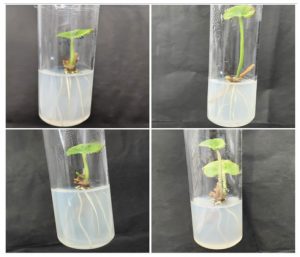
Figure 1: In Vitro regeneration of Centella asiatica: shoot proliferation and root induction under optimized culture conditions.
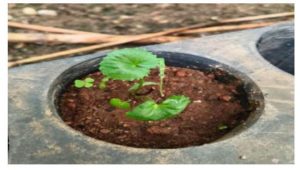
Hardening of Plantlets: Regenerated plantlets were transferred to a mist chamber for acclimatization. The process of hardening helps the plantlets to gradually adapt from in vitro to ex vitro conditions, ensuring higher survival rates under natural environmental conditions.
Figure 2: Ex Vitro acclimatization of micropropagated Centella asiatica plantlets under greenhouse conditions.
Growth Regulators: Different concentrations of plant growth regulators were used to study their effect on shoot initiation, proliferation, elongation, and rooting.
- BAP (6-Benzylaminopurine): 0.0, 1.0, 2.0, 3.0, 4.0 mg/L
- IAA (Indole-3-acetic acid): 0.0, 1.0, 2.0, 3.0, 4.0 mg/L
The combination of BAP and IAA at 3.0 mg/L each showed the best response, with 85% shoot initiation and 95% shoot proliferation along with healthy rooting. Higher concentrations (4.0 mg/L) resulted in excessive callus formation and reduced rooting efficiency.
These conditions were found to be optimal for the in vitro growth and development of Centella asiatica [14].
RESULTS AND DISCUSSION
The present study was conducted to evaluate the effect of different concentrations of BAP and IAA on the in vitro growth and development of Centella asiatica at different culture periods (7, 14, 21 and 28 days).The results clearly indicated that growth response varied significantly with different concentrations of plant growth regulators. Explants cultured on hormone-free medium (0.0 mg/L BAP + 0.0 mg/L IAA) showed no response, confirming that exogenous supply of plant growth regulators is essential for in vitro morphogenesis. Similar observations have been reported in Centella asiatica, where growth regulator-free media failed to induce significant shoot or root development. [10]. Among different explants types, nodal explants showed the highest response, followed by leaf and root explants. This is consistent with earlier findings that nodal segments possess pre-existing meristems, making them more responsive for shoot induction in tissue culture.
With the application of growth regulators, a gradual improvement in growth response was observed. The treatment containing 1.0 mg/L BAP + 1.0 mg/L IAA showed moderate response, with 45% initiation, 55% shoot proliferation and 60% elongation, but poor rooting. Similar moderate responses at lower hormone concentrations have been reported, indicating that suboptimal levels of cytokinin and auxin limit morphogenetic efficiency [15]. The best response in the present study was observed at 3.0 mg/L BAP + 3.0 mg/L IAA, which showed maximum initiation (85%), shoot proliferation (95%), and elongation (90%) along with excellent rooting. These findings are in agreement with previous studies reporting that balanced combinations of cytokinins (BAP/BA) and auxins (IAA/NAA) significantly enhance shoot multiplication and plant regeneration in Centella asiatica [8].
A slightly lower but still effective response was observed at 2.0 mg/L BAP + 2.0 mg/L IAA, indicating that optimal hormonal balance is critical for coordinated shoot and root development. The synergistic interaction between cytokinin and auxin has been widely reported to regulate organogenesis, where cytokinin promotes shoot induction and auxin supports root formation. [15]. However, further increase in hormone concentration (4.0 mg/L BAP + 4.0 mg/L IAA) resulted in reduced growth performance, including decreased elongation and callus formation [3]. This observation supports earlier reports that excessive concentrations of growth regulators can disrupt endogenous hormonal balance and lead to abnormal growth or callogenesis instead of organized plant development.
Surface sterilization treatments also played a crucial role in successful culture establishment. Bavistin and HgCl₂ treatments significantly reduced contamination rates, with maximum effectiveness observed at higher concentrations and optimal exposure times. High contamination rates during initial culture establishment have also been reported in Centella asiatica, emphasizing the importance of effective sterilization protocols. The use of Murashige and Skoog (MS) medium provided essential nutrients for optimal growth and development of explants. Previous studies have also confirmed that MS medium supplemented with appropriate growth regulators is highly effective for micropropagation of Centella asiatica. The regenerated plantlets showed good rooting and high survival rates during acclimatization, indicating their physiological stability. Similar results have been reported where in vitro raised plantlets of Centella asiatica exhibited genetic and biochemical stability after acc limatization.
Overall, the study confirms that in vitro propagation is an efficient and reliable method for mass multiplication of Centella asiatica. The optimal treatment identified was 3.0 mg/L BAP + 3.0 mg/L IAA, which produced maximum shoot proliferation, elongation, and rooting. This is consistent with previous research highlighting the importance of balanced growth regulator combinations for large-scale propagation and conservation of medicinal plants.
CONCLUSION
The present study successfully demonstrates that in vitro propagation of Centella asiatica is highly influenced by the concentration and combination of plant growth regulators (PGRs), specifically BAP (Benzylaminopurine) and IAA (Indole-3-acetic acid). The results clearly show that an exogenous supply of PGRs is essential for promoting growth and development, as the hormone-free medium failed to induce any significant morphological changes. Among the different explant types, nodal explants proved to be the most responsive, likely due to the presence of pre-existing meristems.
The optimal combination of 3.0 mg/L BAP and 3.0 mg/L IAA yielded the best results, with the highest percentages of initiation, shoot proliferation, elongation, and excellent rooting. This aligns with earlier studies that emphasized the role of balanced cytokinin and auxin levels for enhancing shoot multiplication and plant regeneration in Centella asiatica. Lower concentrations of 2.0 mg/L BAP and 2.0 mg/L IAA also provided satisfactory results, confirming that hormonal balance is crucial for coordinating both shoot and root development.
However, higher concentrations of PGRs (4.0 mg/L BAP + 4.0 mg/L IAA) resulted in a decline in growth performance, with decreased elongation and callus formation, supporting the concept that excessive hormone levels can disrupt plant development.
Surface sterilization, utilizing Bavistin and HgCl₂, effectively reduced contamination rates, further highlighting the importance of proper sterilization protocols in the success of in vitro cultures. The use of Murashige and Skoog (MS) medium provided essential nutrients, contributing to the successful growth and development of explants, and subsequent acclimatization of regenerated plantlets showed high survival rates and physiological stability.
In conclusion, the study affirms that in vitro propagation of Centella asiatica is a reliable method for large-scale multiplication, and the optimal PGR combination of 3.0 mg/L BAP + 3.0 mg/L IAA is recommended for efficient propagation and conservation of this medicinal plant species.
Conflict of interest: There is no conflict of interest.
REFERENCES
- Ansarinia, E., and Z. Jouyban. “Conservation of medicinal plants.” 2012: 210-215.
- Bhojwani, S.S., & Razdan, M.K. Plant Tissue Culture: Theory and Practice. Elsevier. 1996.
- Brinkhaus, B., et al. “Chemical, pharmacological and clinical profile of the East Asian medical plant Centella aslatica.” Phytomedicine 7.5, 2000,: 427-448.
- Cheng, C.L., Koo, M.W.L., &Ko, F.N.. Effects of Centella extract on memory. Journal of Ethnopharmacology, 2004, 93(1), 75–81.
- Gamborg, O.L., & Phillips, G.C. (). Plant Cell, Tissue and Organ Culture. Springer1995.
- George, E.F., Hall, M.A., & De Klerk, G.J. Plant Propagation by Tissue Culture. Springer. 2008.
- Gray, N.E., Morre, J., Kelley, J., et al.. C. asiatica improves memory and neuronal health. Scientific Reports, 2018,8, 1–12.
- Gururajan, K., Hegde, D., Udupa, S., & Shetty, S. Optimization of shoot initiation using response surface methodology and callus media standardization for micropropagation of Centella asiatica. Journal of microbiology, biotechnology and food sciences, 2021, 10(4), 685-690.
- Hashim, Puziah, et al. “Triterpene composition and bioactivities of Centella asiatica.” Molecules 16.2 ,2011, : 1310-1322.
- Joshee, Nirmal, Bipul K. Biswas, and Anand K. Yadav. “Somatic embryogenesis and plant development in Centella asiatica L., a highly prized medicinal plant of the tropics.” HortScience 42.3 2007, : 633-637.
- Mohapatra, P., Ray, A., Sandeep, I. S., Parida, R., & Mohanty, S. Genetic and biochemical stability of in vitro raised and conventionally propagated Centella asiatica-A valuable medicinal herb. South African Journal of Botany, 2021, 140, 444-453.
- Murashige, T., & Skoog, F.. A revised medium for plant tissue culture. Physiologia Planetarium, 1962,15, 473–497.
- Parsode, Akanksha, Chaitali Suhas Kulkarni, Sandhya R. Shewale, and Uday Annapure. “Unravelling the Phytochemical Composition of Medicinal herb Blepharis integrifolia and Impact of Drying.” Available at SSRN 6482740.
- Sharma, N., & Singh, B. Micropropagation of medicinal plants. Indian Journal of Biotechnology, 2013, 12 (3), 345–350.
- Shashikala, C. M., S. Shashidhara, and P. E. Rajashekharan. “In vitro regeneration of Centella asiatica L.” 2005,: 53-56.
- Thorpe, T.A. History of plant tissue culture. Molecular Biotechnology, 2007, 37(2), 169–180.
- Zhumanova, Nurgul, et al. “A comprehensive review of new generation plant growth regulators.” ES Food and Agroforestry 17 (2024): 1190.